Hayes-Skolling research laboratory
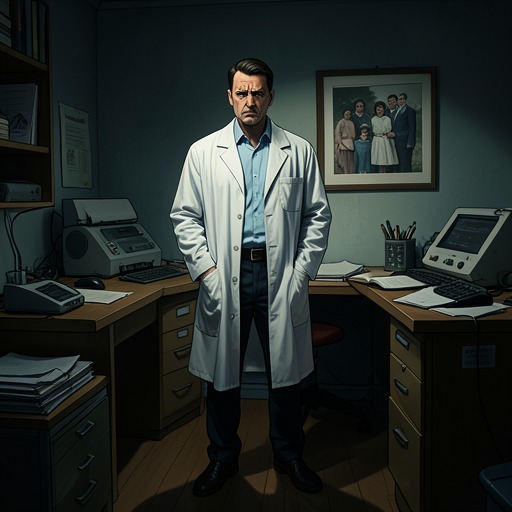
The LighthouseThe Hayes-Skolling research laboratory is a Midlands research institution directed by Mark Yelland, whose work with primates has attracted animal-liberation activists. The novel presents the laboratory through the pressures surrounding that work: the need to keep research operating, the threat of disruption, and a public dispute over how its activities may be represented. Its institutional requirements reach beyond the laboratory itself, shaping Yelland’s time on Combe Island, while its contested work becomes the ground on which he and Nathan Oliver clash.
Identity and Research
The laboratory is identified by its location in the Midlands and by Yelland’s role as its director. When Dalgliesh is briefed on the visitors to Combe Island, Yelland is described as having arrived after the writer Nathan Oliver, Oliver’s daughter Miranda, and copy-editor Dennis Tremlett. His professional identity is immediately qualified by the fact that animal-liberation activists have targeted the laboratory. The book does not provide a detailed account of its organization, its research programme, or the number of people it employs; it establishes its importance through Yelland’s responsibility for the institution and the risks attached to its work.
Those risks are not merely reputational in Yelland’s account. He considers the research life-saving and fears that publicity could jeopardize both the work and his family’s safety. The animal-liberation campaign is therefore presented as a pressure on a working research institution, not simply as an abstract ethical disagreement. At the same time, the novel makes the treatment of laboratory animals part of the dispute: Oliver has sought out a junior staff member to ask about the research and the suffering of the primates. The laboratory’s research becomes visible through competing claims about its necessity, its practices, and who has the right to describe them.
Oversight and Continuity
The laboratory’s work depends on designated coverage when its director is away. Home Office regulations require a Licence Holder or deputy Licence Holder to be in the laboratory or on call. Before leaving for Combe Island, Yelland places an experienced and reliable deputy in charge, expecting that the deputy can manage any crises for two weeks. He expects to be contacted only in an extreme emergency. This arrangement shows that a retreat from work does not mean the institution can simply be left without accountable oversight: his absence is possible because responsibility has been formally delegated.
Yelland has previously used Combe Island as a place to withdraw from the dangers and demands of his professional life. On his third visit, he again chooses Murrelet Cottage, where he values its relative isolation and the chance to examine his work and life away from daily decisions. The contrast between the cottage’s quiet and the laboratory’s potential crises is sharpened by his careful handover. His private respite rests on a continuing professional obligation, and the possibility that his deputy may need him remains an exception he has planned for rather than ignored.
Yelland, Oliver, and the Laboratory Dispute
At dinner, Yelland confronts Oliver over a laboratory director in Oliver’s forthcoming novel, whom Yelland believes has been made arrogant and unfeeling in a way that will lead readers to identify the character with him. Oliver denies that he knows Yelland or has used him as a model, claiming instead that his art draws on himself. The disagreement is not resolved by that denial. Yelland says that Oliver has questioned a junior member of laboratory staff about the work and the suffering of the primates, and challenges him over how he obtained the staff member’s name. He suspects that the animal-liberation activists may have supplied it.
For Yelland, the danger lies in how the novel could be received and used. He believes a fictional laboratory director will be taken as a portrait of him and that Oliver’s reputation will give the portrayal influence within the animal-liberation movement. Because he cannot sue, he sees no legal remedy for what he considers a damaging depiction; because he wants no publicity, a public contest would itself be unwelcome. He warns that both his research and his family are at risk, and leaves the meal before coffee. His objection thus joins personal exposure to institutional vulnerability: a novel may be fictional, but, in his view, its consequences for the laboratory will not be.
Narrative Significance
The laboratory is not depicted through its facilities or experiments in detail. Instead, the book makes it legible through the people and obligations attached to it: a director who must provide licensed coverage, a deputy entrusted with crises, a staff member questioned about the work, activists who threaten disruption, and a writer whose treatment of research may affect its public standing. This limited but pointed view keeps the institution at the intersection of professional responsibility and public interpretation.
The conflict also refuses an easy separation between scientific necessity and the moral questions raised about animal suffering. Yelland defends the research as life-saving and fears that it will be endangered; Oliver’s inquiries bring the primates’ suffering into the argument. The novel does not settle that dispute through an institutional account of the research. Instead, it shows how competing claims about the laboratory become entangled with professional security, family safety, and the power of representation. The Hayes-Skolling research laboratory therefore functions as both a workplace requiring practical continuity and a contested subject whose public image may have consequences for the people who depend on it.